





AI Summary
- A bilayer tablet compression machine produces tablets with two distinct layers compressed into a single solid dosage form, allowing two active pharmaceutical ingredients or two release profiles to coexist in one tablet without mixing or cross-contamination between layers.
- Bilayer tablets are growing rapidly in fixed-dose combination therapy for cardiovascular disease, diabetes, and central nervous system conditions, where combining two APIs in one tablet improves patient compliance and simplifies medication regimens.
- The engineering of a bilayer tablet press is significantly more complex than a standard rotary tablet press, requiring two separate compression zones, independent weight control for each layer, and a rejection system capable of identifying defects in either layer independently.
- Fluidpack manufactures bilayer tablet compression machines designed for pharmaceutical-grade production with individual layer weight monitoring, anti-cross-contamination architecture, and compliance-ready batch documentation.
Introduction: The Growing Demand for Bilayer Tablet Manufacturing
As pharmaceutical treatment protocols become more sophisticated, the demand for fixed-dose combination products has grown significantly. Patients managing chronic conditions such as hypertension combined with hyperlipidaemia, or type 2 diabetes combined with cardiovascular risk, increasingly benefit from combination therapies that reduce their daily pill burden. The bilayer tablet is one of the most effective solid dosage forms for delivering these combination therapies.
A bilayer tablet is a single tablet containing two distinct compressed layers, each with its own formulation, dosage, and potentially its own release profile. The two layers are physically separated within the tablet, preventing the two active ingredients from interacting with each other while delivering them together in a single convenient dosage unit.
For pharmaceutical manufacturers considering bilayer production, the first major decision is the tablet press machine. A bilayer tablet compression machine is fundamentally different from a standard single-layer rotary tablet press in its design, its compression sequence, and its quality control requirements. This article explains everything you need to know before making that equipment decision.

What Is a Bilayer Tablet and Why Is It Clinically Valuable?
A bilayer tablet consists of two layers of compressed pharmaceutical powder or granules, each containing different active ingredients or different formulations of the same ingredient. The layers are compressed sequentially in a single compression cycle, producing a tablet that holds both layers in physical contact but without significant mixing at the interface.
The clinical value of bilayer tablets is substantial. In cardiovascular therapy, combining an antihypertensive agent with a statin in a single bilayer tablet has been shown to significantly improve patient adherence compared with taking two separate tablets. In neurology and psychiatry, combining agents that work on different receptor pathways allows more nuanced treatment in a single tablet. In diabetes management, bilayer formulations allow immediate-release and extended-release profiles of the same API to be delivered together, providing both rapid onset and sustained action.
From a commercial perspective, bilayer tablet formulations represent a significant product lifecycle management opportunity. Pharmaceutical companies can develop novel fixed-dose combination products using established active ingredients, creating differentiated branded products with genuine therapeutic advantages.
How a Bilayer Tablet Compression Machine Works
Understanding the bilayer compression process requires first understanding what makes it different from standard single-layer tablet compression. In a standard rotary tablet press, the sequence is straightforward: powder fills the die, the upper and lower punches compress it, and the tablet is ejected. One formulation, one compression event, one tablet.
In a bilayer tablet compression machine, the sequence has additional steps and considerably more precision requirements. The process begins with the first layer filling the die cavity with the first formulation. A pre-compression stage applies a light compression force to the first layer, sufficient to consolidate it into a stable mass but not to fully compress it into a finished tablet. This first layer pre-compression step is critical: if the force is too low, the first layer powder will mix with the second layer powder in the subsequent filling step. If the force is too high, the interface between the two layers will be too compact for the layers to adhere properly after final compression.
After first layer pre-compression, the second formulation is fed into the die cavity on top of the consolidated first layer. The second layer filling must be precise and uniform, and the feeding system must prevent cross-contamination between the two formulations. The machine then applies the main compression force to compress both layers simultaneously into the finished bilayer tablet. Finally, the tablet is ejected in the usual manner.
This sequence requires the bilayer tablet press to have two separate feeding systems, two independently controlled compression stages, and individual weight monitoring capability for each layer. A defect in either layer must be detected and the tablet rejected before it reaches the output.
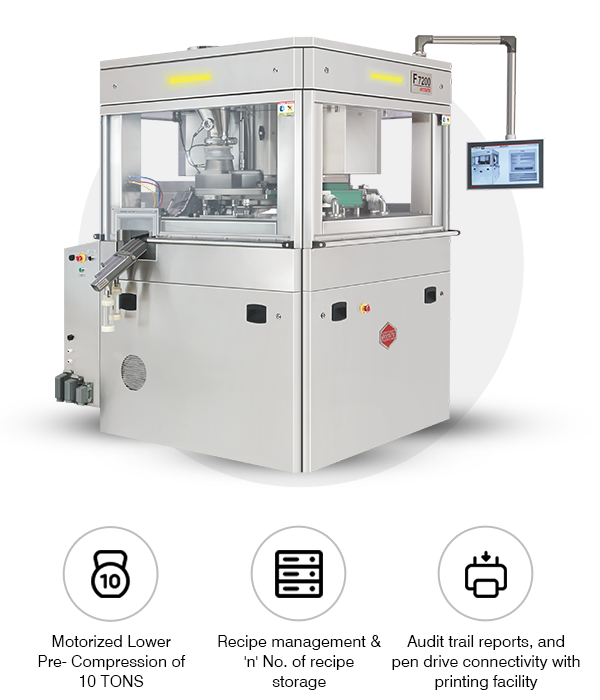
Key Engineering Features of a Bilayer Tablet Press Machine
Dual Feeding System with Cross-Contamination Prevention
A bilayer tablet compression machine requires two completely separate powder feeding systems: one for the first layer formulation and one for the second. These feeding systems must be physically isolated from each other to prevent any cross-contamination between the two APIs. The machine design must ensure that as the turret passes from the first layer filling station to the second, no residual first-layer powder is carried into the second-layer filling zone.
High-quality bilayer tablet press machines use specialised feeding shoe designs and vacuum extraction systems between the two filling zones to ensure complete powder separation. This is a non-negotiable requirement for bilayer tablets involving APIs that must not be mixed even in trace quantities.
First Layer Pre-Compression Control
The pre-compression force applied to the first layer is one of the most critical parameters in the bilayer compression process. It must be precisely controlled and independently adjustable from the main compression force. Too little pre-compression allows powder movement during second layer filling. Too much creates an interface that compromises tablet integrity after full compression. A bilayer tablet press must allow the operator to set and monitor first-layer pre-compression force independently, with real-time monitoring and the ability to detect deviations automatically.
Individual Layer Weight Monitoring
Weight control in bilayer tablet compression is considerably more complex than in single-layer production. Each layer must be within its specified weight range, and the total tablet weight is the sum of the two layer weights. A machine that controls total tablet weight without independent layer weight monitoring cannot guarantee that each layer contains the correct amount of its respective active ingredient.
A properly designed bilayer tablet compression machine monitors the compaction force applied during first-layer pre-compression to estimate first-layer weight, and monitors the main compression force to estimate total tablet weight. The difference between the two provides an estimate of second-layer weight. Any tablet where either layer falls outside its individual weight target is automatically rejected.
Rejection System Capable of Layer-Specific Detection
The auto rejection system on a bilayer tablet press must be capable of identifying and rejecting tablets with defects in either layer. A tablet that is within total weight specification but has an incorrect split between the two layers must still be rejected, because the dosing ratio between the two APIs is wrong even if the total weight is correct.
Regulatory Requirements for Bilayer Tablet Manufacturing
Bilayer tablets are regulated under the same pharmaceutical manufacturing frameworks as any other solid dosage form, but the complexity of the product demands particularly rigorous process validation and batch documentation. Because two APIs are present in a single tablet, regulators pay close attention to the uniformity of each individual layer, the consistency of the layer weight ratio across the batch, and the absence of cross-contamination between layers.
For FDA-regulated production, 21 CFR Part 211 requires batch records that document the process parameters for both compression stages, the individual layer weight data, and the rejection statistics for each layer independently. For EU-GMP regulated production, similar requirements apply. A bilayer tablet compression machine with a fully computerised PLC control system, locked panel after batch start, and automatic end-of-batch report generation supporting these documentation requirements is essential for regulated market production.
When Does Your Formulation Need a Bilayer Tablet Press?
A bilayer tablet compression machine is required when you are producing any of the following: fixed-dose combination tablets containing two APIs that must not physically contact or mix, tablets requiring two different release profiles from the same or different APIs within a single dosage unit, tablets where aesthetic differentiation between two layers is a product requirement, or extended-release combination products where one layer provides immediate release and a second provides controlled release of an additional API.
If your formulation requires only a single API and a single release profile, a standard rotary tablet press is the appropriate machine. The bilayer press is specifically for the more complex situations described above, and its higher capital cost and operational complexity are justified only when the product genuinely requires the dual-layer architecture.

Fluidpack Bilayer Tablet Compression Machine
Fluidpack manufactures bilayer tablet compression machines under the ACCURA brand for pharmaceutical manufacturers requiring fixed-dose combination tablet production. The Fluidpack bilayer press features dual independent feeding systems with cross-contamination prevention architecture, independently controlled first-layer pre-compression, individual layer weight monitoring through compaction force measurement, auto rejection for layer-specific defects, fully computerised PLC control with locked panel and audit trail, and automatic batch report generation covering both layer parameters and total tablet data.
The machine is designed and built to cGMP standards with SS 316L product contact parts, and supports the equipment qualification documentation required for IQ, OQ, and PQ validation in regulated pharmaceutical manufacturing environments.
Conclusion: Bilayer Tablet Press Machine Is a Specialised Investment for a Growing Product Category
The bilayer tablet compression machine is a specialised piece of pharmaceutical manufacturing equipment with significantly higher complexity than a standard rotary tablet press. It is the right investment when your product portfolio includes or is planned to include fixed-dose combination tablets, modified-release combination products, or any formulation requiring two independent compressed layers in a single dosage unit.
For pharmaceutical manufacturers entering the bilayer tablet market, the engineering complexity of the machine makes manufacturer selection and application support even more important than for standard tablet press procurement. Contact Fluidpack at info@accuratabletpress.com or visit www.fluidpack.net to discuss your bilayer production requirements.