




AI Summary
- The United Arab Emirates is the fastest-growing pharmaceutical manufacturing market in the Middle East and Africa region, with the Dubai Industrial Strategy 2030 and Abu Dhabi's economic diversification programme both driving investment in local pharmaceutical production capability.
- UAE-based pharmaceutical manufacturers serve not only the domestic GCC market but also export to African, South Asian, and Southeast Asian markets, requiring tablet press machines that meet international GMP standards and generate the batch documentation required for multi-market export compliance.
- The UAE's pharmaceutical regulatory framework through the Ministry of Health and Prevention and Abu Dhabi's Department of Health requires GMP-compliant equipment with validated processes and complete batch documentation, aligning with international standards from the FDA, EU-GMP, and WHO.
- Fluidpack supplies high-speed tablet press machines and complete solid dose production line equipment to pharmaceutical manufacturers across the Middle East and GCC region, with ACCURA machines designed for the compliance and output standards that UAE manufacturers require.
Introduction: The UAE's Rising Pharmaceutical Manufacturing Ambition
The United Arab Emirates has historically been a major pharmaceutical importer and distributor, serving as the commercial hub through which medicines flow to the broader Middle East, Africa, and South Asian markets. This distribution role remains important, but a significant transformation is underway. The UAE is increasingly a pharmaceutical manufacturer in its own right, driven by economic diversification objectives, healthcare sovereignty goals, and the recognition that local pharmaceutical production creates high-value employment and reduces dependence on international supply chains.
The Dubai Industrial Strategy 2030 identifies pharmaceutical manufacturing as one of the priority sectors for industrial development. Abu Dhabi's economic diversification programme similarly supports healthcare manufacturing as a strategic industry. Both emirates have established pharmaceutical manufacturing zones and provide incentives for pharmaceutical companies to establish production facilities in the UAE.
For pharmaceutical manufacturers operating in the UAE, whether established domestic players or international companies establishing UAE production for regional distribution, the tablet press machine at the heart of the solid dose production line must meet the GMP standards of the UAE's regulatory framework and the export compliance requirements of the multiple international markets the UAE serves.

UAE Pharmaceutical Regulatory Framework for Manufacturing
Pharmaceutical manufacturing in the UAE is regulated by the Ministry of Health and Prevention at the federal level, with Abu Dhabi's Department of Health and Dubai's Health Authority also playing regulatory roles within their respective emirates. The pharmaceutical manufacturing licencing and GMP inspection process is aligned with international standards, drawing on WHO-GMP, PIC/S, and ICH guidelines.
For tablet press machines used in UAE pharmaceutical manufacturing facilities, the regulatory expectations mirror those of other internationally aligned GMP frameworks: equipment must be qualified through IQ, OQ, and PQ protocols, critical process parameters must be documented and reproducible, batch manufacturing records must be complete and traceable, and the machine must operate with validated process settings that cannot be changed without documented authorisation.
UAE pharmaceutical manufacturers who export to Gulf Cooperation Council member states, including Saudi Arabia, Kuwait, Bahrain, Qatar, and Oman, must also comply with the GCC's Central Registration requirements, which are aligned with WHO-GMP and include site inspection by GCC regulatory representatives. Manufacturers exporting to African and South Asian markets typically need WHO Prequalification or country-specific regulatory approvals, each of which has its own documentation requirements that fully automatic tablet press machines are best equipped to support.
The UAE as a Pharmaceutical Export Hub
What makes the UAE particularly interesting as a pharmaceutical manufacturing location is its re-export capability. A UAE-based pharmaceutical manufacturer can produce tablets in a Dubai or Abu Dhabi facility and export to markets across the Middle East, Africa, South Asia, and Southeast Asia through the UAE's world-class logistics infrastructure. Dubai's Jebel Ali port and the UAE's network of air freight connections make it one of the most logistically efficient pharmaceutical export platforms in the world.
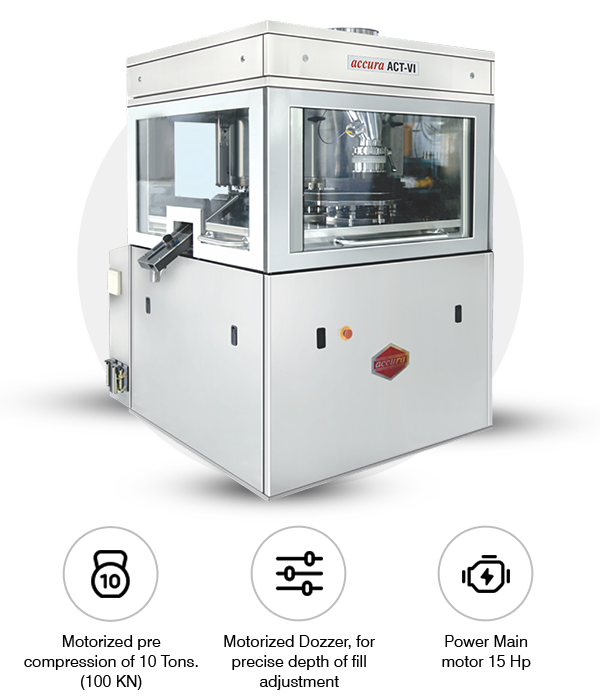
This export platform role means that UAE pharmaceutical manufacturers often need to meet not just UAE regulatory requirements but the requirements of multiple importing countries simultaneously. A tablet that is exported from the UAE to Egypt, Kenya, and Pakistan in the same week must meet the GMP documentation requirements of all three importing markets. A fully automatic tablet press machine that generates a complete, standardised electronic batch report is far better positioned to support multi-market export documentation than a semi-automatic machine dependent on manual batch record keeping.
High Speed Tablet Compression for UAE Production Volumes
UAE pharmaceutical manufacturers serving the GCC domestic market and regional export markets need tablet compression equipment capable of meaningful production volumes. The GCC pharmaceutical market serves a combined population of approximately 55 million people across six countries, and UAE manufacturers who position themselves as regional producers rather than domestic-only suppliers need commensurately higher production capacity.
A high-speed double rotary tablet press machine capable of producing 3 lakh to 7 lakh tablets per hour is appropriate for UAE manufacturers with regional export ambitions. The double rotary design produces twice the output of a single rotary machine at the same turret speed, providing the volume economics needed for competitive regional pharmaceutical supply without proportionally increasing factory floor space requirements.
For UAE manufacturers establishing their first pharmaceutical production facility, a phased approach to capacity investment often makes sense: beginning with a medium-speed fully automatic single rotary tablet press to establish the production process and regulatory compliance framework, then adding or replacing with a high-speed double rotary machine as volumes grow and the business case for higher capacity is established.

Key Features for UAE Pharmaceutical Tablet Press Machines
For UAE pharmaceutical manufacturers, the fully automatic tablet press with complete compliance features is not just a regulatory requirement but a commercial necessity for multi-market export. The most important features for UAE production specifically are the automated batch report generation that supports simultaneous regulatory submissions to multiple market authorities, the locked PLC panel that provides the process integrity evidence that GCC Central Registration inspections require, and the multilingual software capability that allows operation in both English and Arabic without compromising the integrity of the batch record.
The ability to produce both B tooling and D tooling tablets from the same machine through an interchangeable turret is particularly valuable for UAE manufacturers with diverse product portfolios. The UAE pharmaceutical market includes both standard-size generics and specialty larger-format tablets, and a machine that handles both without requiring separate capital investment maximises the return on the tablet press equipment investment.
Energy efficiency is an increasingly important consideration for UAE manufacturers, given the high cost of electricity in the region relative to some other manufacturing markets. High-efficiency tablet press machines that achieve the required output at lower energy consumption per tablet produced contribute meaningfully to the overall manufacturing cost economics over the machine's operational life.
Fluidpack in the Middle East and GCC Market
Fluidpack has supplied pharmaceutical equipment to manufacturers across the Middle East and GCC region for decades, with a client base that includes producers in the UAE, Saudi Arabia, Kuwait, and other GCC member states. The ACCURA range of tablet press machines is designed and built to the GMP standards required for pharmaceutical production in regulated markets globally, and has been validated in facilities that have passed GMP inspections across multiple international regulatory frameworks.
For UAE-based pharmaceutical manufacturers, Fluidpack offers the complete range of solid dose production equipment including roll compactor machines, oscillating granulators, vibro sifters, multi mills, tablet press machines from single punch to the ACCURA F7200 High Speed Double Rotary Tablet Compression Machine, and tablet dedusters. Complete production line supply from a single manufacturer simplifies qualification, commissioning, and ongoing service support.
Conclusion: UAE Pharmaceutical Manufacturers Need World-Class Tablet Compression Equipment for a World-Class Export Platform
The UAE's position as a Middle East pharmaceutical manufacturing and export hub demands world-class tablet compression equipment. The combination of domestic GMP regulatory requirements, GCC Central Registration compliance, and multi-market export documentation needs makes fully automatic tablet press machines with electronic batch records, locked controls, and automatic reporting not just preferable but essential for UAE pharmaceutical manufacturers with serious export ambitions.
Contact Fluidpack at info@accuratabletpress.com or visit www.fluidpack.net to discuss the right tablet press machine configuration for your UAE pharmaceutical manufacturing facility.