





AI Summary
- Kenya is the pharmaceutical manufacturing hub of East Africa, with an industry that supplies medicines to Uganda, Tanzania, Rwanda, Burundi, and beyond, making it the most strategically important pharmaceutical manufacturing location in the sub-Saharan African region outside South Africa.
- The Pharmacy and Poisons Board of Kenya requires pharmaceutical manufacturers to meet WHO-GMP standards, which sets a clear compliance framework for tablet press machine selection and operational documentation requirements.
- Kenya's pharmaceutical manufacturers serve a regional market of over 300 million people across East Africa, requiring tablet compression equipment capable of scaling from domestic supply to regional export volumes while maintaining the GMP documentation standards that WHO Prequalification demands.
- Fluidpack has supplied pharmaceutical equipment to manufacturers across East Africa and offers the complete range of WHO-GMP-compatible tablet press machines for manufacturers at every production scale in Kenya and the broader East African region.
Introduction: Kenya as East Africa's Pharmaceutical Manufacturing Centre
Kenya has developed the most significant pharmaceutical manufacturing industry in East Africa over the past three decades. With manufacturers based primarily in Nairobi and its industrial environs, Kenya's pharmaceutical sector produces a range of essential medicines for both the domestic Kenyan market and for export to neighbouring East African countries.
The geographic and economic logic of Kenyan pharmaceutical manufacturing is straightforward. Kenya sits at the centre of the East African Community, a regional integration bloc that includes Uganda, Tanzania, Rwanda, Burundi, and South Sudan, with a combined population of over 300 million people. A pharmaceutical manufacturer in Kenya can supply this entire regional market through established trade routes and, increasingly, through harmonised regulatory frameworks that allow products approved in one EAC member state to be recognised in others.
This regional supply role makes Kenyan pharmaceutical manufacturers an important part of Africa's pharmaceutical access infrastructure. It also creates specific requirements for the tablet compression equipment used in Kenyan production facilities: machines that meet WHO-GMP standards, produce consistently documented batches, and are capable of scaling to the output levels needed to serve not just the Kenyan domestic market but the broader East African region.

The Pharmacy and Poisons Board and WHO-GMP Requirements for Kenyan Manufacturers
The Pharmacy and Poisons Board is the regulatory authority responsible for pharmaceutical manufacturing oversight in Kenya. The PPB requires pharmaceutical manufacturers operating in Kenya to comply with WHO-GMP standards, and conducts regular GMP inspections of manufacturing facilities to verify compliance.
For Kenyan pharmaceutical manufacturers with ambitions to supply regional markets through KEBS certification or WHO Prequalification, the GMP standard required is effectively the WHO Prequalification GMP standard, which is one of the most rigorous internationally recognised frameworks. WHO Prequalification is required for pharmaceutical products supplied through donor-funded procurement programmes including PEPFAR, the Global Fund, and UNICEF, which represent a significant proportion of pharmaceutical purchasing in East Africa.
A tablet press machine in a WHO-GMP-compliant Kenyan facility must support equipment qualification documentation, maintain complete and accurate batch manufacturing records for every production run, operate with validated and reproducible process parameters, and provide the documentation evidence that WHO Prequalification site inspections require.
East Africa's Pharmaceutical Product Demand and Manufacturing Opportunity
The East African pharmaceutical market is shaped by the region's disease burden profile and by the donor-funded healthcare programmes that serve a large proportion of the population. Antiretrovirals for HIV treatment are a major product category across the region, with Kenya, Uganda, and Tanzania all having significant HIV-positive populations requiring lifelong treatment. TB treatments, antimalarials, antibiotics, and vaccines are also major demand categories.
In addition to these essential medicines, East Africa's growing urban middle class is driving demand for chronic disease medicines for hypertension, diabetes, and cardiovascular conditions. This is a commercial pharmaceutical market that is growing rapidly and that domestic manufacturers are well-positioned to serve if they have the production capacity and quality credentials.
The opportunity for Kenyan pharmaceutical manufacturers is significant. Replacing imported medicines with locally manufactured equivalents reduces the cost of healthcare for East African governments and health systems, improves supply chain resilience, and builds the regional pharmaceutical manufacturing capability that Africa needs for long-term healthcare self-sufficiency.
Why Fully Automatic Tablet Press Machines Are Essential for WHO Prequalification in East Africa
For Kenyan pharmaceutical manufacturers pursuing WHO Prequalification to access donor-funded procurement, the tablet press machine must generate the level of batch documentation and process control evidence that WHO site inspectors require. This means electronic batch records with complete process parameter data, locked control settings that cannot be changed without authorisation and logging, compaction force-based auto weight control with real-time tablet monitoring, and automatic end-of-batch production reports.
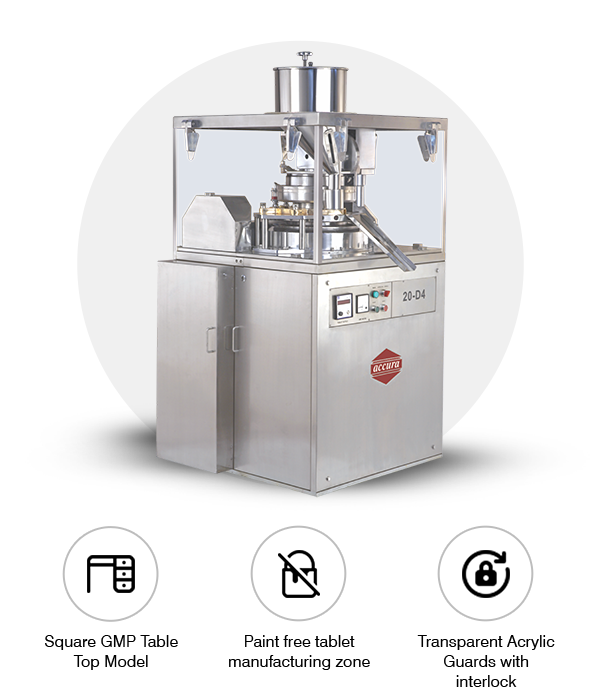
Semi-automatic tablet press machines with manual batch record keeping can theoretically meet WHO-GMP minimum requirements, but they place a heavy administrative burden on production personnel and create a high risk of documentation gaps that will be identified during WHO Prequalification inspections. The manual nature of semi-automatic machine documentation also makes it more difficult to demonstrate the process consistency and reproducibility that WHO Prequalification requires across multiple batches.
A fully automatic tablet compression machine eliminates these risks. The batch report is generated automatically, the process parameters are locked and cannot be changed without a documented authorisation, and the audit trail records every machine event throughout the batch. The documentation package is complete and inspection-ready as soon as the batch is finished.

Scaling Output for East African Regional Supply
A Kenyan pharmaceutical manufacturer supplying only the domestic Kenyan market of approximately 55 million people needs different production capacity than one supplying the full East African Community market of 300 plus million. The tablet press machine specification must reflect the scale of supply the manufacturer is targeting.
For domestic Kenya supply, a medium-speed single rotary tablet press producing 1 lakh to 3 lakh tablets per hour in a fully automatic configuration is typically appropriate. This provides sufficient capacity for a meaningful range of products at domestic market volumes while keeping the capital investment at a manageable level for manufacturers at this scale.
For manufacturers targeting regional East African supply including Uganda, Tanzania, Rwanda, and beyond, a high-speed double rotary tablet press producing 3 lakh to 7 lakh tablets per hour is required. The volume economics of regional pharmaceutical supply make the higher capital investment of a high-speed machine financially justified through the lower per-tablet production cost at scale.
The Complete Solid Dose Production Line for East African Manufacturers
A tablet press machine does not stand alone. Kenyan and East African pharmaceutical manufacturers building out solid dose production capability need the complete upstream and downstream equipment set to produce finished tablets. This includes roll compactor machines or wet granulation equipment for granule production, oscillating granulators and vibro sifters for particle sizing and classification, multi mills for particle size reduction where needed, tablet press machines for compression, tablet dedusters downstream of the press, and tablet coating machines if film-coated tablets are being produced.
The qualification documentation burden for a complete production line from a single equipment manufacturer is significantly lower than for a line assembled from multiple different suppliers. A single supplier's IQ and OQ documentation templates, compatible equipment interfaces, and unified after-sales service infrastructure all reduce the complexity and cost of building a compliant East African pharmaceutical production facility.
Conclusion: The Right Tablet Press Machine Is a Strategic Investment in East African Healthcare
For pharmaceutical manufacturers in Kenya and the broader East African region, the tablet press machine at the heart of the solid dose production line is more than a piece of production equipment. It is a strategic investment in the region's pharmaceutical manufacturing capability, its ability to achieve and maintain WHO-GMP compliance, and its competitiveness as a supplier to the region's growing healthcare market.
Choose a tablet press machine and manufacturer who understand the regulatory environment you operate in, can support your compliance journey, and offer equipment that scales with your ambitions. Contact Fluidpack at info@accuratabletpress.com or visit www.fluidpack.net to discuss your East African pharmaceutical production requirements.